About Nigeria
Nigeria is the most populous country in Africa, located in West Africa with over 200 million people (World Bank, 2024). It is divided into six geopolitical zones and 36 states, each with unique cultural and economic characteristics. Despite its size and resources, rural communities face significant health and education challenges, including menstrual health inequities.
About Akwa Ibom State
Akwa Ibom State lies in Nigeria’s South-South geopolitical zone with an estimated population of about 7,200,000 people. It is known for its rich cultural heritage and oil-producing economy. Administratively, it is divided into three senatorial districts:
- Uyo (North-East)
- Ikot Ekpene (North West)
- Eket (South)
The state has 244 government secondary schools, with 184 located in rural areas—where period poverty is most severe or prevalent considering the poor management of menstrual hygiene and lack of awareness. Our educational and enlightenment campaign targets 50% of these rural schools to improve menstrual health education while using random sampling to gather data for evidenced based intervention. Our proposed coverage would cover the distributions belaow:
- Uyo Senatorial District: 29 schools
- Ikot Ekpene Senatorial District: 30 schools
- Eket Senatorial District: 33 schools
Section 1: What is Period Poverty?
Period poverty is a global health challenge affecting women and girls in both wealthy and low-income countries. Reports show that many girls and women worldwide rely on rags or other improvised materials for menstrual management (UN Women, 2025). In the United States, a St. Louis University study found that women in East St. Louis often resort to makeshift items like tissue, socks, or old T-shirts during menstruation (St. Louis University, 2019).
In Nigeria, the situation is even more alarming. According to the Federal Ministry of Women Affairs, over 37 million women and girls face period poverty, limiting access to menstrual hygiene products, education, and health services (Nigeria Ministry of Women Affairs, 2025).
Section 2: Our Mission
Bridging-Health Int’l, through its subsidiary Ascending Health Foundation (AHF), is piloting the Period Poverty Reduction Campaign (PPRC) across rural public schools in Akwa Ibom State. The PPRC addresses menstrual health as a critical Social Determinant of Health (SDoH) by delivering education, stigma reduction, data collection for evidence-based intervention and future academic publication.(AHF PPRC Field Data, 2025).
Section 3: Why This Matters
Social Determinants of Health (SDoH) and Education
What are SDoH?
SDoH are the non-medical factors influencing health outcomes, including the conditions in which people are born, grow, live, work, and age (World Health Organization, 2025). These determinants include economic stability, education access and quality, healthcare access, neighborhood environment, and social context.
How SDoH Affect Education
Health and education are interdependent—poor health constrains learning, while limited education worsens health outcomes (WHO, 2018). For adolescent girls, menstrual health is a pivotal SDoH factor:
- Economic Barriers: Low-income households cannot consistently afford sanitary products, pushing girls to unsafe alternatives (e.g., cloth, tissue) (UN Women, 2025).
- Water & Sanitation: Rural schools lacking clean water and private, functional toilets make menstrual management difficult and drive absenteeism (Nigeria Ministry of Women Affairs, 2025).
- Social Norms & Stigma: Cultural taboos cause shame and silence, discouraging attendance during menstruation (UN Women, 2025).
- Health Risks: Reusing unclean materials and washing with stream water increases infection risk and missed school days (AHF PPRC Field Data, 2025).
Impact on Education
- Absenteeism: Up to 48% of rural Nigerian girls miss school during menstruation due to resource deficits and stigma (Nigeria Ministry of Women Affairs, 2025).
- Dropout Risk: Repeated absences can accumulate and lead to early dropout, limiting future opportunities (UN Women, 2025).
- Gender Inequality:Period poverty widens educational gaps, undermining girls’ economic empowerment and community development (UN Women, 2025).
Global & Regional Snapshot
Globally, 1 in 4 girls lacks access to safe menstrual products, and millions miss school during their periods (UN Women, 2025). In Sub Saharan Africa, over 65% of girls cannot afford sanitary pads, leading to absenteeism, stigma, and health risks (UN Women, 2025). Field observations in Akwa Ibom show that in some communities’ water is fetched from streams; girls commonly use cloth rags for menstruation—washed and reused with the same stream water—leaving a high residual health risk.(Ascending Health Foundation [AHF] PPRC Field Data, 2025).
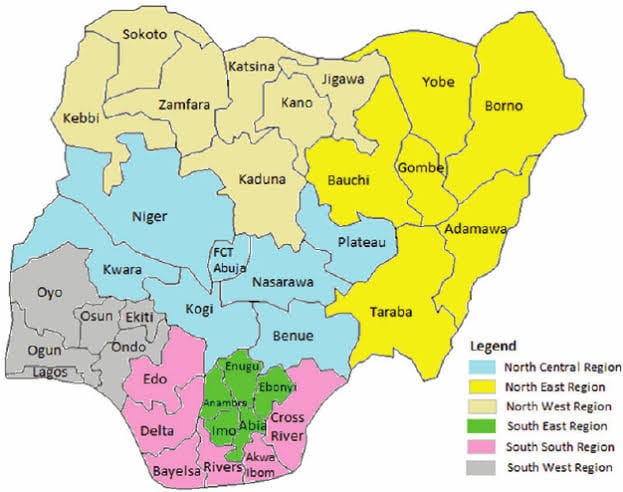
Map of Nigeria showing Akwa Ibom State (campaign focus area).

Nigeria → Akwa Ibom → Target Districts
Section 4: Campaign Planned Coverage & Live Progress
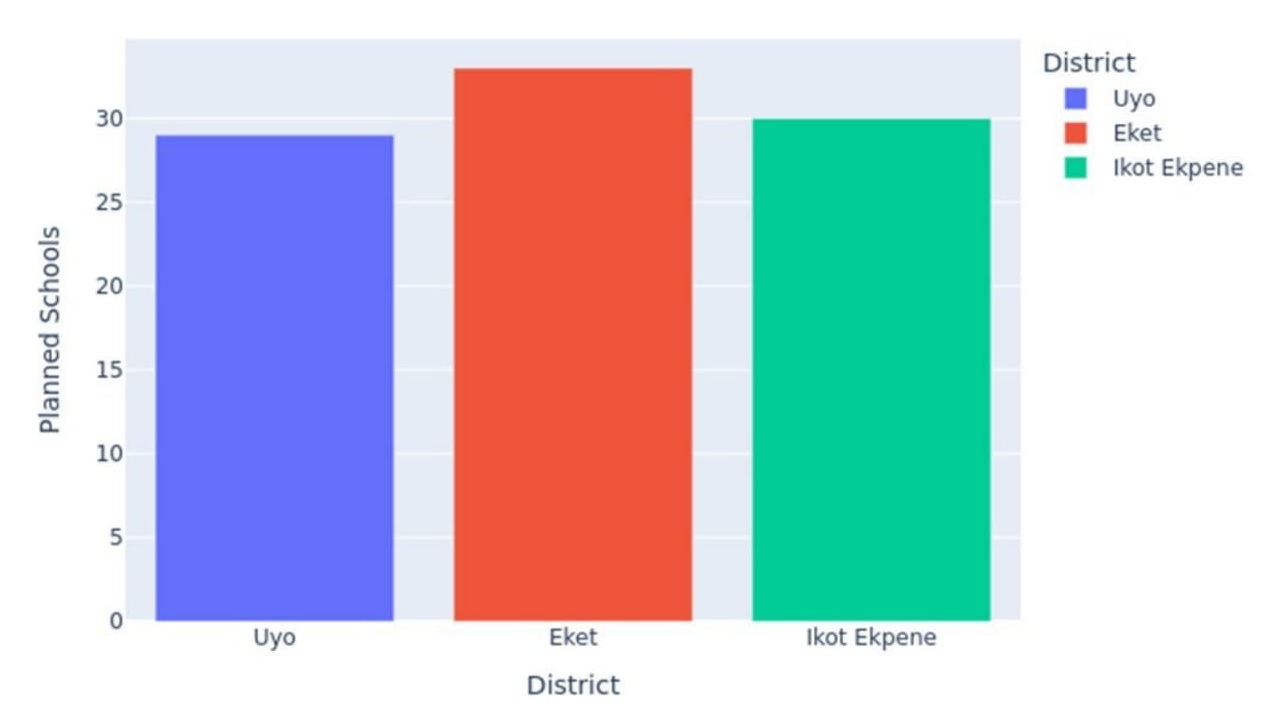
Planned Coverage (Rural Schools Targeted):
- Uyo: 29 schools
- Eket: 33 schools
- Ikot Ekpene: 30 schools (AHF PPRC Field Data, 2025)
Outreach Progress (July 2024 – Nov 2025):
Schools Visited
| S/N | Schools Name | Address | District |
|---|---|---|---|
| 1 | Odoro Ikono Community Secondary School | Mbiabong Ikot Udofia, Ini LGA, Akwa Ibom State - Nigeria | Ikot Ekpene |
| 2 | Community Secondary School | Adadia, Uruan LGA, Akwa Ibom State - Nigeria | Uyo |
| 3 | National High School | Etebi, Esit Eket LGA, Akwa Ibom State - Nigeria | Eket |
| 4 | Community Seconday School | Ikono Uyo Akwa Ibom State - Nigeria 2024. | Uyo |
| 5 | Apostolic Seconday School | Nsit Ibom Akwa Ibom State - Nigeria | Uyo |
| 6 | Celebrating International Day of the Girl Child | Mbiabong (Shelter Afrique Extension, Uyo) Akwa Ibom State - Nigeria | Uyo |
| 7 | Atakpo Community Secondary school | Mbiaya Uruan, Uruan LGA, Akwa Ibom State - Nigeria | Uyo |
| 8 | Secondary school | Okat, Onna LGA, Akwa Ibom State - Nigeria | Eket |
| 9 | Methodist Secondary School | Ibiaku Issiet, Uruan LGA, Akwa Ibom State - Nigeria | Uyo |
| 10 | Nduo Eduo High school | Okon Eket, Eket LGA, Akwa Ibom State - Nigeria | Eket |
| 11 | National High School | Etebi, Esit Eket LGA, Akwa Ibom State - Nigeria | Eket |
| 12 | The Salvation Army School | Akai Ubium, Nsit Ubium LGA, Akwa Ibom State | Uyo |
| 13 | Mary Hanney Secondary School | Oron, Akwa Ibom state, Nigeria | Eket |
| 14 | Community Secondary School | Okuko, Urue Offong/Oruko, Akwa Ibom State, Nigeria | Eket |
| 15 | Independence High School, Ukana | Essien Udim | Ikot Ekpene |
| 16 | Ikono People's High School, | Nnung Ukim, Ikono LGA, Akwa Ibom State | Ikot Ekpene |
| 17 | Community Comprehensive Secondary school | Nung Udoe - Ibesikpo Asutan LGA | Uyo |
| 18 | .Community Secondary school | Ikot Nko - Ibesikpo Asutan LGA | Uyo |
Rotary Partnership for Community Impact
Since its launch, the Period Poverty Reduction Campaign (PPRC) has reached 18 schools across Akwa Ibom State through the leadership, volunteer efforts, and investments of Bridging-Health Int'l (BHI) and Ascending Health Foundation (AHF).
We are grateful for the support received from individual donors, volunteers, community stakeholders, and partner organizations whose contributions have helped sustain the campaign and extend its reach. Every contribution—financial, in-kind, and volunteer-based has played an important role in advancing this work.
We are now honored to expand this impact through a Tripartite Partnership Agreement that brings together Bridging-Health Int'l (BHI), Friends of Scott SCCS Rotary Club (USA), and Rotary Club of Uyo (Nigeria) in a shared commitment to improving community health and educational outcomes.
Through health education, community outreach, and ongoing data collection, the campaign promises to generate evidence that will help inform sustainable, evidence-based interventions in underserved communities.

References
Akwa Ibom State Government. (2024). About Akwa Ibom State. https://akwaibomstate.gov.ng/about-akwa-ibom/
Aladeselu, M. (n.d.). Menstrual hygiene day: 37 million Nigerian females are in period poverty. The Cable. https://www.thecable.ng/menstrual-hygiene-day-37-million-nigerian-females-are-in-period-poverty/
St. Louis Public Radio. (2025). St. Louis nonprofit spreads period poverty awareness. https://www.stlpr.org/health-science-environment/2024-05-22/st-louis-nonprofit-spreads-period-poverty-awareness
St. Louis University. (2019). SLU study: Menstrual hygiene needs unmet for low-income St. Louis women. https://www.slu.edu/news/2019/january/menstrual-products-access-research.php
UN Women. (2025). Period poverty: Why millions of girls and women cannot afford their periods. https://www.unwomen.org/en/articles/explainer/period-poverty-why-millions-of-girls-and-women-cannot-afford-their-periods
World Bank. (2024). Nigeria – Population, total. https://data.worldbank.org/indicator/SP.POP.TOTL?locations=NG
World Health Organization. (2018). The right to health. https://www.who.int/director-general/speeches/detail/the-right-to-health
World Health Organization. (2025). Social determinants of health. https://www.who.int/health-topics/social-determinants-of-health